
We hear the word ‘trigger’ a lot these days.
Originally, this term comes from psychology, where it is used in the context of trauma, mental health, and addiction. A trigger is something — internal or external — that activates a strong emotional or physiological response, often linked to a past experience.
Triggers can take many forms: a tone of voice, a facial expression, a smell, a memory, a thought, or a situation. For example, loud noises such as fireworks may activate symptoms in someone living with Post-Traumatic Stress Disorder, or the smell of alcohol may trigger cravings in someone with a history of alcohol dependence.
Today, the word is used more broadly. Are there more triggers now? Are we experiencing more intense reactions or simply becoming more aware of what has always been there?
When we’re triggered, we feel threatened on some level — whether the threat is real, remembered, or perceived.
The body responds by activating a survival state: fight, flight, freeze, or shutdown. We may notice a faster heart rate, shallow breathing, or tension in the body. Emotionally, we might feel anxious, angry, overwhelmed, or numb. We may react by lashing out, withdrawing, spiralling, or shutting down.
At the same time, our capacity for clear thinking can reduce. The Prefrontal Cortex — the part of the brain involved in reasoning and regulation — becomes less active. This is why we can feel “hijacked,” reacting in ways we later regret or do not fully understand. We may be left with shame, guilt or feelings of defeat.
When we’re triggered, our reaction can feel out of proportion to what is happening in the moment. Often, this is because the response is not only about the present — it is shaped by the past.
Early in life and over time, we form beliefs and internal narratives about ourselves and the world. These become the lenses through which we perceive and interpret our experiences, often outside of conscious awareness. In Rebirthing Breathwork, we work with the understanding that these patterns are not only psychological, but also held somatically — in the breath, the nervous system, and the body’s memory.
If, at different points, we felt alone, dismissed, hurt, controlled, or unsafe, we adapted in the ways we could — to cope, to belong, to stay connected. In doing so, we may have formed beliefs such as, “I’m not enough” or “I’m too much” or “I’m not safe”. These become encoded in our bodies and nervous systems.
As we go through life, situations that resemble those earlier experiences, even subtly, can activate these same beliefs and help shape our reaction. A delayed reply to a message, a change in tone, or a moment of disconnection can touch something much deeper.
At the same time, we can also develop supportive beliefs such as, “I am worthy”, “I am lovable”, “Life is good”. These, too, influence how we meet life.
What triggers one person may not affect another in the same way. Each of us carries a unique history, not only from our own lives, but also from our families, environments, and wider cultural influences. Triggers are deeply personal and often invisible to others.
A strong reaction is not necessarily an overreaction. It is often a reflection of what has been lived, learned, and held within the system. They are often intelligent adaptations, a survival response, that once helped us maintain connection or safety. We never fully know what someone else is carrying. Compassion, for ourselves and for others, is so important.
While triggers are shaped by past conditioning, they are not fixed. The principle of Neuroplasticity shows us that the brain and nervous system can change over time. With awareness and the right support, it is possible to develop new patterns and responses. This is where practices that work directly with the body and breath can be powerful.
In Rebirthing Breathwork, we work with the understanding that our experiences, including early and pre-verbal ones, are held within the body, nervous system and the breath.
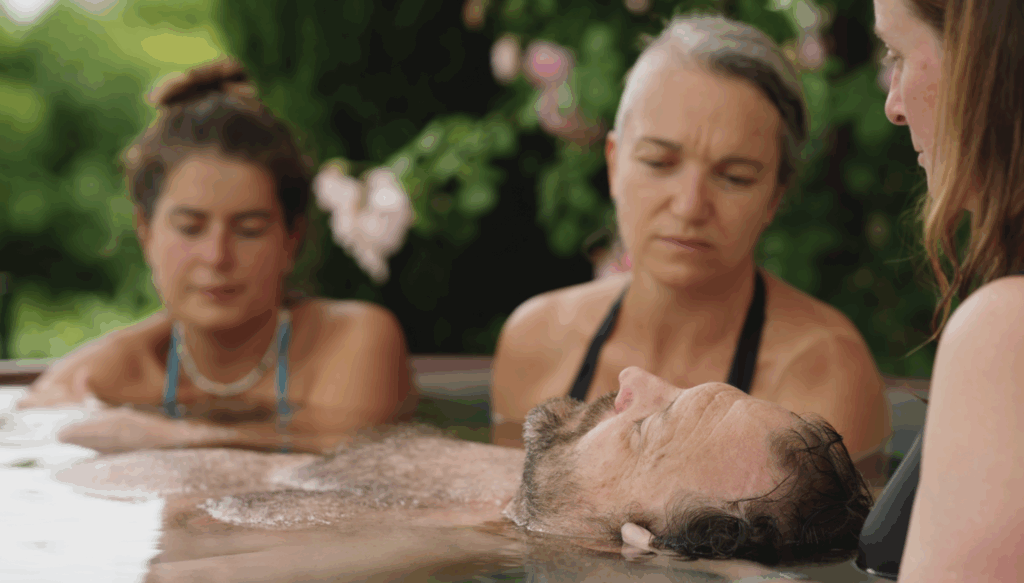
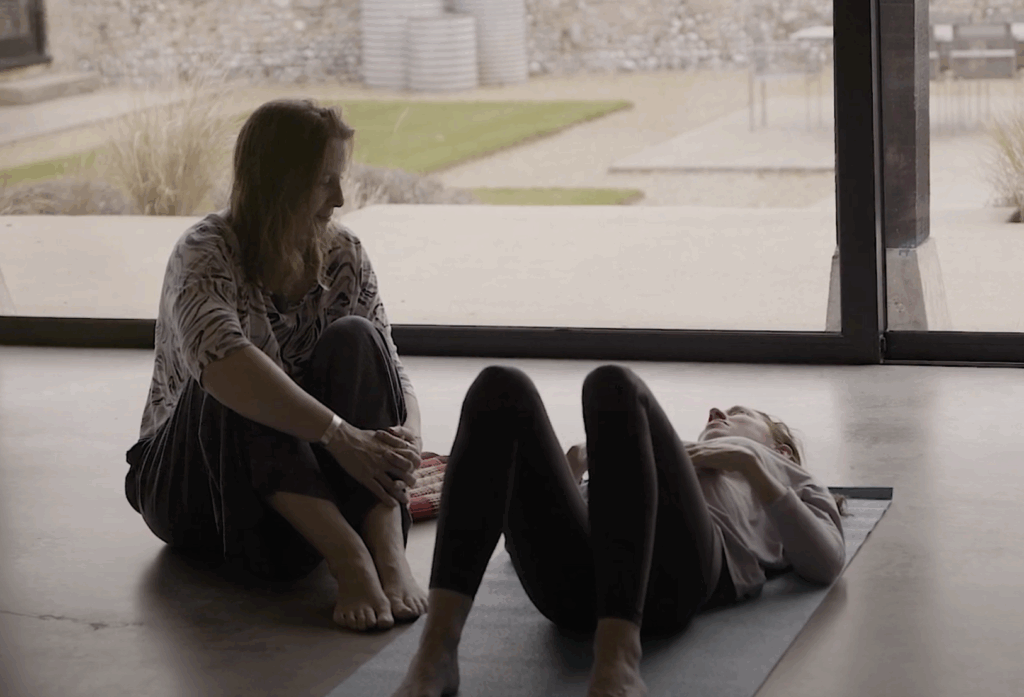
Through Conscious Connected Breathwork, with the support of a trained practitioner, we can do this tender work. We can begin to gently access and meet what is held within our system. This process gradually expands our capacity to stay present with what arises — the charge, the tension, and the experiences that were once disconnected, ruptured, or unable to fully move through us.
The breath guides us to exactly where we need to go. Over time, we learn to trust both the process and the breath itself. It becomes a powerful tool for integration, allowing previously unresolved experiences to be processed and creating space for new, more supportive beliefs to take root and grow.
With practice, we gain greater awareness of our patterns and beliefs, along with an increased ability to reshape them. In daily life, this ripples outward. We find ourselves more able to stay with what is, less pulled by old reactions. Triggers may lose their intensity, sometimes dissolving altogether, as the system learns a new way of being.
As Viktor E. Frankl said, ‘Between stimulus and response there is a space. In that space is our power to choose our response. In our response lies our growth and our freedom.’
Within that space lives the possibility for something new.
At first, it may feel very small, especially in moments of activation, when old patterns move quickly through us. But with practice, even a brief moment of awareness can begin to change how we meet the experience and relate to how we feel, see what we may need.
Rather than turning away, we begin to practice staying. Noticing. Allowing. We learn, little by little, to witness our reactions as they arise, to feel our feelings and the sensations in our bodies, and to gently pause — even if only for a breath.
In that pause we can remind ourselves, ‘This feels familiar… but this is now.’ or ‘I am safe enough in this moment.’or ‘This too belongs.’ Or whatever words feel true.
We will not always meet these moments as we intend. This path is not linear, nor is it a quick fix. It unfolds in its own time.
And still, over time, the space begins to widen. What was once an automatic reaction becomes responding with greater presence and curiosity, a little less judgement, and a little more compassion and agency.
In this way, our triggers begin to shift. No longer only sources of distress, they become moments pointing us toward the places within us that are ready to be seen, held, and integrated.
Perhaps the question gently changes from, ‘Why am I reacting like this?’
to, ‘What is this moment asking me to notice, to feel, or to care for?’
Because the way we meet ourselves in these moments shapes how we meet others —
and over time, this can bring more presence, understanding, and steadiness into our relationships too.
Written by Kath Veitch, 14th April, 2026
If you’d like a resource for helping with triggers or areas of difficulty – Tara Brach’s RAIN method can be found here as step by step instructions and a guided audio https://www.tarabrach.com/rain-practice-radical-compassion/